
Hidden lives of waste work
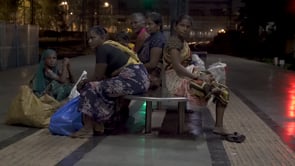
‘Hidden lives of waste work’ is part of a series of films produced by Compound 13 Lab – a long-term project about waste, work and survival in the city of Mumbai using arts-based methods to establish an experimental learning space and innovation lab for young people in Dharavi. The film provokes debates about the ‘story of waste’, challenging received notions of disposable products, materials and people, and reflecting on labour, urban inequalities and the ‘biopolitics of disposability’. We wanted to show waste not as inert matter but as an active agent shaping bodies, ecologies, neighbourhoods and futures. The women’s daily rhythms of retrieval, carrying, sorting and trading reveal a choreography of survival.
Through a shared, co-produced approach to documentary, we wanted the film to foreground the forms of inclusion and exclusion structuring informal waste economies, showing how undervalued, invisibilised livelihoods support families while maintaining Mumbai’s urban metabolism. Compound 13 Lab was established for communities of waste workers who earn their living from the city’s informal waste management sector and plastic recycling economy. We, the lab, set out to contribute to reframing public debate: representing waste work and the marginalised people undertaking it as performing valuable infrastructural maintenance work.
Crucial to this film, (shot largely on an iphone) is unfettered access to the spaces and intimate stories of waste work, based on close relationships, building trust and providing support over many years – embedding the wider work of the lab in these communities. Interviews with the women’s collective are conducted by a former waste-picker who then became owner of a recycling business before working for ACORN and managing pedagogical activities at the Lab. This combination of critical pedagogies, participatory action research, citizen science and arts-based storytelling helped create a radical framework for researching, rethinking and representing waste work.