
Left Behind
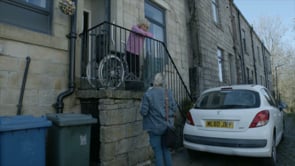
Our original plan was to tell the story of a community transitioning to net zero. Rossendale Valley Energy is creating three demonstrator houses using ground source heating and solar energy, with the ultimate aim of decarbonising swathes of terraced streets. We wanted to tell a hopeful environmental story.
However, the reality we encountered was starker. Residents were isolated, with no means to heat their homes. We filmed energy advisors working with the community to help people access grants. As contributor Lou told us: ‘people really are suffering. I’m sure you’ve heard of heat or eat.’
Faced with this, we pivoted: the film became a portrait of fuel poverty and, simultaneously, of a community hauling itself out of energy injustice through imagination and collective action.
Fiorentino (2024) argues that the social fabric of communities is often eroded when places are left behind. We want this film to be a testimony that the social fabric of Rossendale Valley remains very much intact as it was almost 200 years ago, when the Cooperative Movement began here. Filmmaking proved essential to the project. The camera created trust in ways that other research methods could not: attending coffee mornings and community dinners with a crew signalled genuine commitment. Contributors who might never engage with an academic paper were willing to speak on film. The resulting documentary has the capacity to generate conversations, attract investment, and bear witness to people in 21st-century Britain living without heating or hot water, making visible an inequality that statistics alone cannot convey.