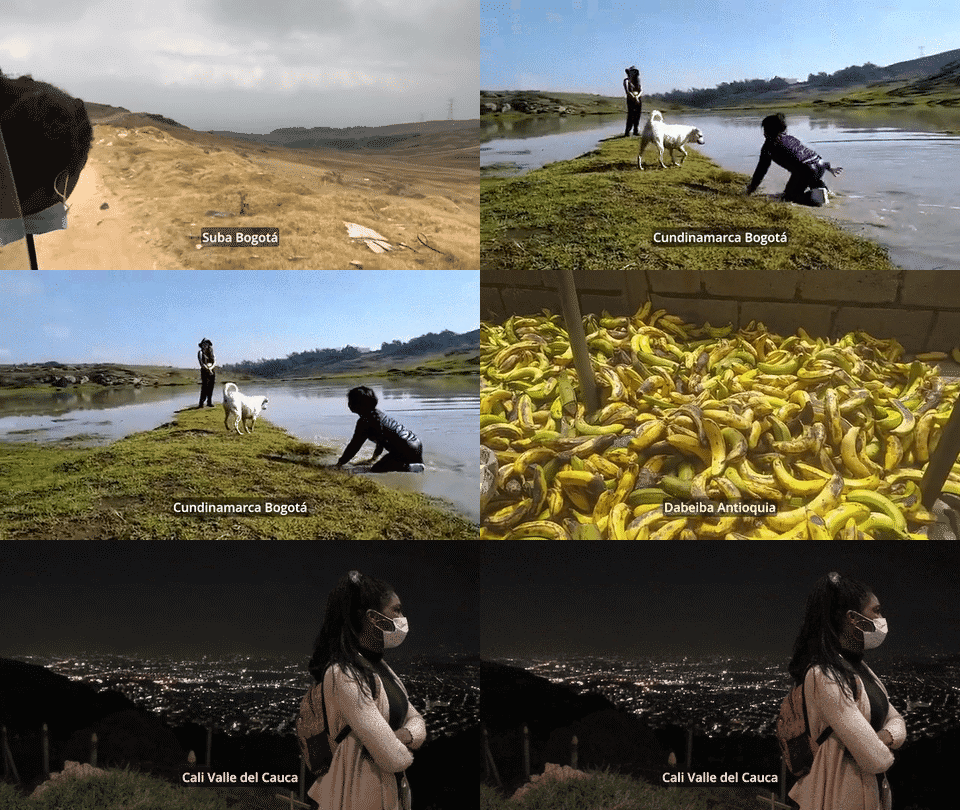
Je suis partout et nulle part Ă  la fois
Portugal French and Portuguese. English subtitles This coming of age film follows Filipe and Hugo while they spend the summer in Trás-os-Montes, Portugal. From childhood memories, lazy summers filled with boredom, to their aspirations of a better life, the film explores the ambiguous relationship these youngsters foster with rural Portugal, and their way they navigate across various identities, languages and terrains. Then Director writes: Film-making was a central component of the project, since the research design. It enabled to create a long term relation with the participants, and to access their memories and imaginations. But also, in a project focusing on the making of places in peripheries, it enabled me to highlight particular landscapes and rural areas' atmospheres and architectures. Portugal is a country of emigration: one in five Portuguese live abroad. In the last decades, the regions bordering Spain are the most affected by these departures In the northeastern region of Trás-os-Montes, a third of the population has left since the 1960s. This is where I met with two youngsters, sons and grandsons of emigrants: Hugo and Filipe. Hugo lives close to Paris and spends every summer at his grandparents’ in Trás-os-Montes. There he reconnects to his roots and the slow pace of the village. Filipe did the same: for years, he spent every summer at his grandma’s before his family eventually moved back to Portugal, a few kilometres from his grandma’s home. But what awaited him once he graduated from the local college? As many before him, he emigrated. When we meet, during the summer 2019, he works in London. In February 2020, the world enters a pandemic Filipe is laid off, he packs and comes back to his village in Portugal. Filipe dreams of new horizons, and the answer lays in front of him of going back to where he was born, Paris. While Hugo, in Paris, dreams of living and working in Portugal but, not in the village, not in Trás-os-Montes This is a film about a region which performs as a shrine, a physical container of memories of happy childhoods and simpler times, that one visits once a year and puts a small bouquet of flowers at its feet. Some stay close-by, and live out of its pilgrims, but very few are able to experience it as a real and viable home.

Je suis partout et nulle part Ă  la fois

Middle Lands
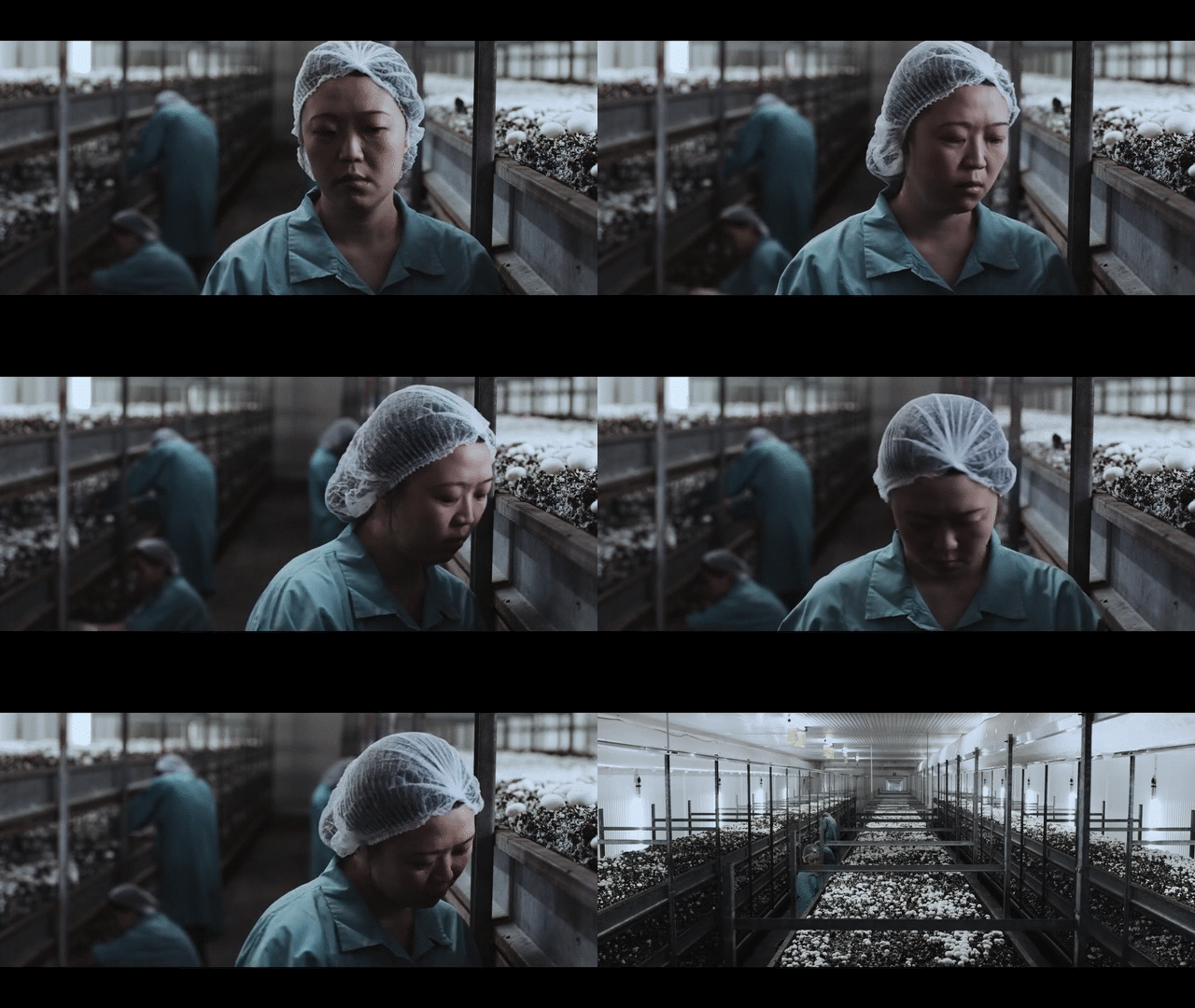
Italian and Chinese Middle LandsFavourite Sara's homework for summer holidays is to grow and take care of a little tomato seedling. But her family lives in a flat, so she will plant it in a small vegetable garden that her grandparents raised in an abandoned and hidden land between town and countryside. The idea of the film is the tip of the iceberg of an etnographic and visual research led in the last years. It is the output of a series of traces, experiences, sensations, listened and imagined stories that take place in the urban-sprawled area of Veneto region of Italy. The research intends to pay attention to the spatial and relational dynamics that affect the margins, understood as interstitial spaces, in this case segments of the "third landscape", spaces that they are usually not considered as identifying and invested with meaning, often invisible places. Sometimes, however, it seems precisely the suspended, hybrid and indecisive status of these spaces to welcome - and in a certain sense reflect - liminal situations, becoming a sort of laboratory and alternative space for relationships: some of these spaces are "adopted" and by individuals or groups are grafted onto them, which activate processes of re-signification, re-appropriation, re-qualification, tracing some points of a new one phenomenology of care. The short film aims to tell one of this experience and how it relates to the surrounding context. - The Chinese female workforce responds perfectly to the logic of industrial production of modern mushroom farms. In particular, the qualities that are appreciated by employers are those of dexterity, precision, speed, resistance to effort, large availability to work and flexibility. Furthermore, “they are not very unionized”. It can be said that the demand for Chinese labor is deeply embedded with the characteristics of the food industry and scale-economies: it constitutes a relatively low-cost, easily replaceable, non-unionized and "silent" labor force, which it allows high and constant production levels, which in turn allow to reduce consumer prices. Shooting a short film allowed me to speak almost freely about these delicate issues. It was a great challenge because both the cast and the crew were Italian-Chinese, in order to live a multicultural and exchange experience. It also was not so easy to find a mushroom farm who allowed us to film.

Middle Lands

Grandhotel Cosmopolis Transformation
Germany Supporting local transformations with the Grandhotel Cosmopolis: cultural politics, care and collaboration beyond the pandemic The film is an emotional, visual and narrative dimension of a collective learning process of a cultural institution that took place in the pandemic. The directors say: We aimed to interpretate provisional findings of an activist-research project that took place at a cultural institution in Augsburg (Germany) during the pandemic. Symbolised as “Grandhotel Cosmopolis Transformation Process” the project relates to the current crisis of culture production, raising questions on purpose, strategy and participants for the so often claimed need for cultural change towards more just, sustainable and fair urban life. Based on several municipalist engagements, it assembles in a post-structural interpretation what was learned on enabling and limiting conditions for the co-creation of collective actions towards urban transformation. Dwelling on self-organisation, collective reflection and re-signification, the architects for transformation experiment with practices of co-production. Understood as prefigurative practices they might serve as suggestions for urban planning in Augsburg and more specifically they intent to inform the following collective re-design of the 2600qm building that cultural institution wants to maintain as real world lab. When this film narrates the phase of deliberative orientation about this institutional re-design, a second film will accompany the implementation of hopefully co-designed modifications. The film itself was produced in collaboration of people who participated in and made sense in different ways of the “Grandhotel Cosmopolis Transformation Process”, but directed by the activist-researcher herself. The aesthetic form reflects its discontinuities, envisioned fears and hopes and ambiguities that belong to this collective learning in support of urban transformation beyond the pandemic.

Grandhotel Cosmopolis Transformation

Refuge
France Athens, Greece Migrant Crisis, Cities/Urban Life, Housing/Gentrification, Covid-19/Pandemic Turkish (English Subtitles) Following the life of a Turkish political refugee living in a squatted neighbourhood in Athens. My first purpose was to raise the voice of political refugees, who have crossed the borders to escape persecutions in their own countries. I wanted to explore the connection this man has constructed with this alternative living space. The squatted neighborhood is a complex space itself, with its own rules, system and cycle but after all, it is a refuge for refugees from all around the world as well as any one who share the dream of an alternative way of life. This was the biggest squat I have seen and I was fascinated from the collective work that keeps this place alive. In those straitened circumstances, they try to implement a horizontal administrative system based on solidarity. My biggest challenge during the filming was my lack of filming equipment. And also, I think I should have stayed there even more to realize a full-length film about the squats, by listening to more stories to show the different trajectories. As I am a political refugee as well, I face similar difficulties to stay in different European country so I didn't have the means to stay there longer. Selected Reviews An important contemporary testimony with geopolitical value. Stories of exile in Greece, the hardship, the everyday challenges and quotidian ways of living in your adoptive country. Instead of talking heads, talking bodies are shown interspersed with random occurrences in the urban area including people, places, cats, and practices.

Refuge