When Monsters Walked The Earth
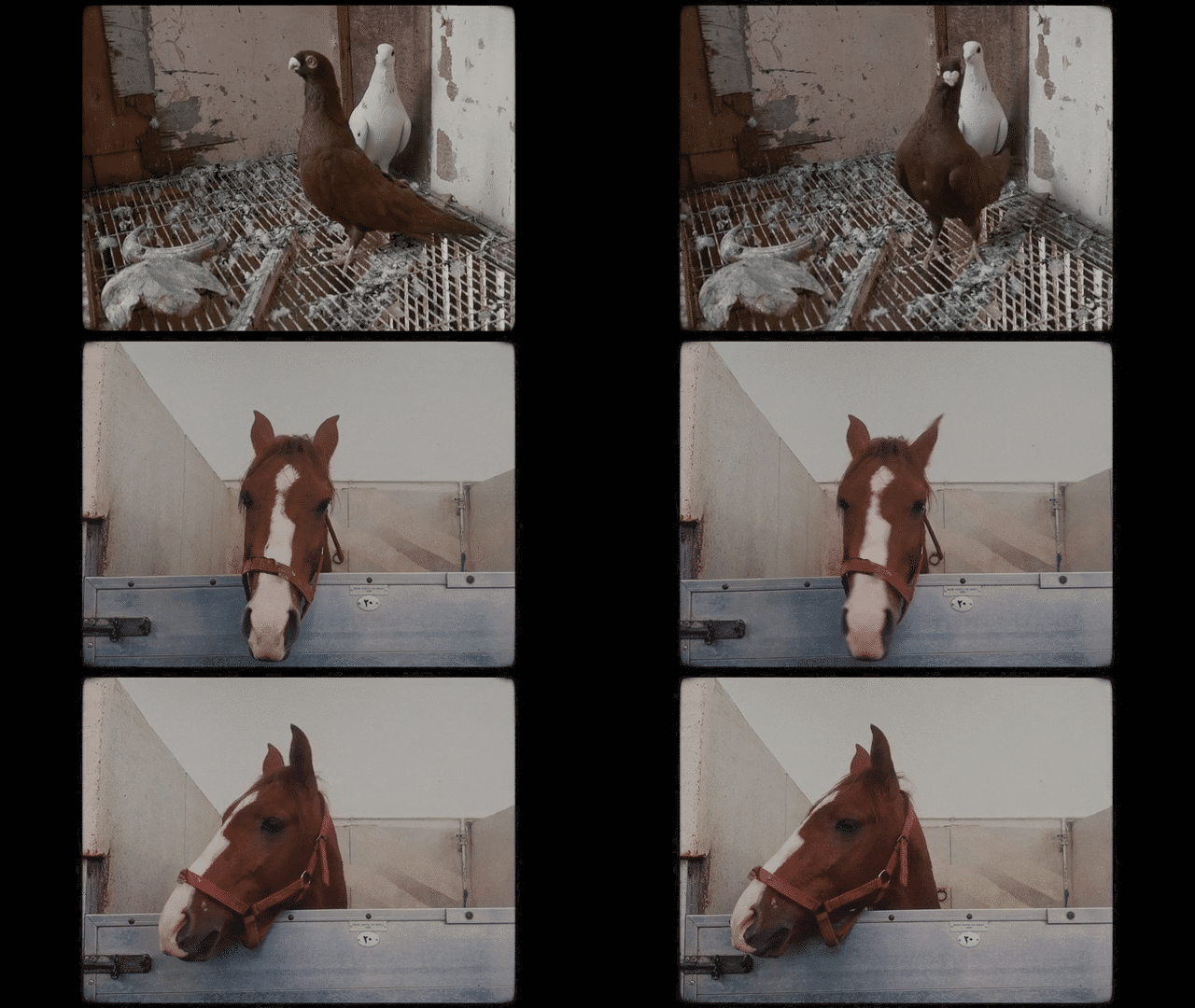
Maryland, USA University of Seville, Spain Grasshoppers have been admired and villainized throughout history. They have experienced significant changes in our world, including those most recently induced by humankind, having to adjust and resist individually and collectively. The film navigates current challenges capitalism has posed on the environment through the lens of this millenary species in rural Maryland. Can grasshoppers show more humanity than humans? This film explores how the current relations of production and intensive use of land affect the environment through the lenses of grasshoppers, a species that has been around for over 250 million years. The filmmakers start from the idea that our world has a form. Mountains, rivers, trees, and bushes… are the result of thousands of years of evolution. They have grown, adjusted, and mutated. But landscapes would not be without human perception, which has always been conditioned to human needs. People have taken whatever they needed from nature to survive and, in the process, have created a way to understand it. Like many other species, human relationships with the environment have never been peaceful. But it has become more violent as the centuries have gone by, first through capitalism organizing spatial relations (land grabs, imperialism) and in recent times because of world population increasing at a similar pace as greed. The film focuses on this evolution, exposing the contradictions of our actions as a species.

When Monsters Walked The Earth

Rich Appetites: The Foundation
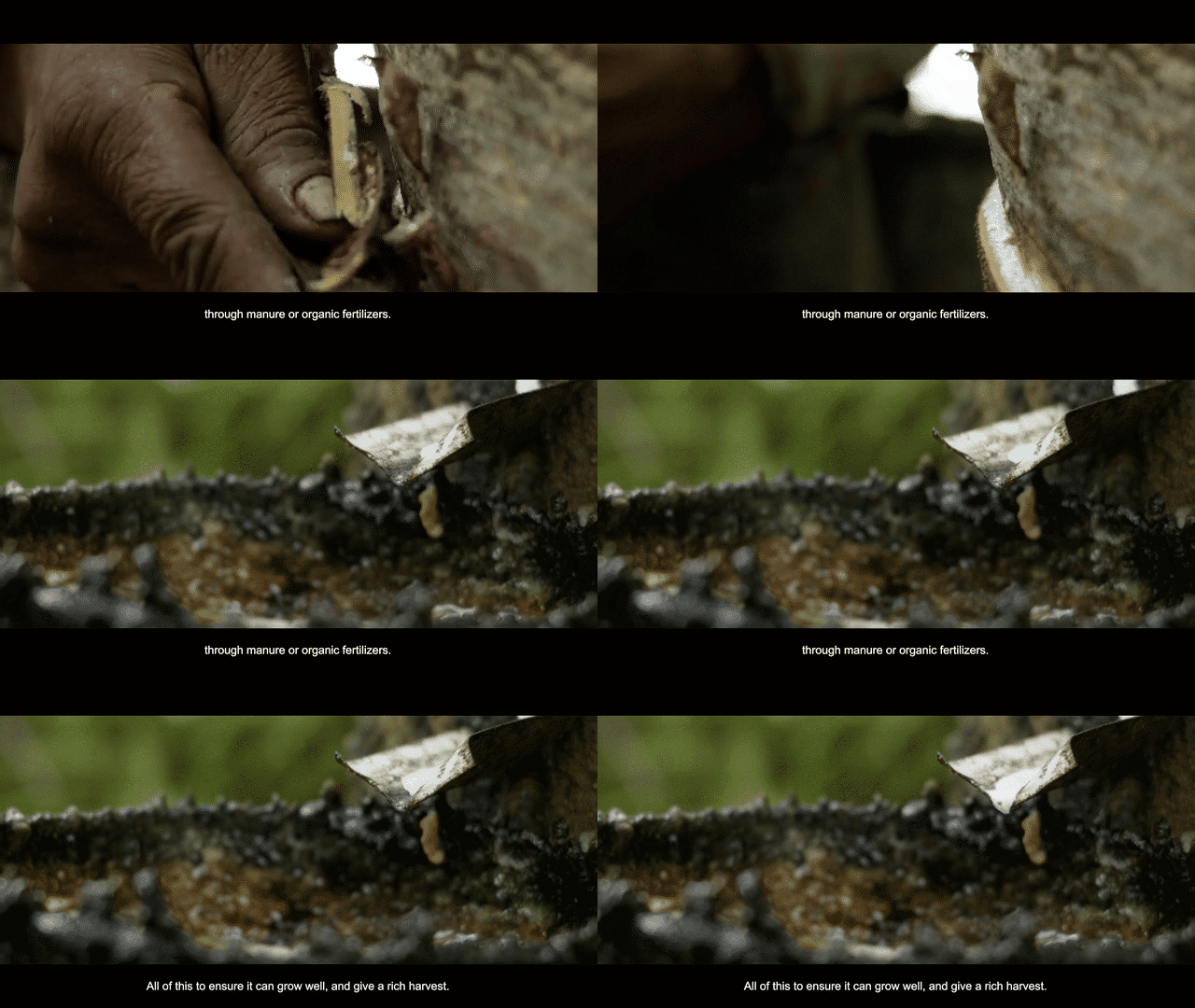
Industrial agriculture has failed to solve hunger, decimated rural communities, and had severe ecological consequences. So why is this model being exported to Africa and promoted in international policy circles? Our film sought to investigate the role of the Gates Foundation and other philanthrocapitalist endeavors in pushing industrial and high tech forms of agriculture on farmers in Africa, and demonstrate how and why these efforts are exacerbating hunger and inequality, rather than solving them. We also wanted to highlight widespread resistance by civil society organizations and farmers, who have been developing and practicing sustainable agroecological alternatives that offer greater promise in ensuring food security and addressing climate change. Rich Appetites Film 1: The Foundation is the first short film in a 5 part series. The other titles in the series include Seeds, Money, Science, and Agroecology in Action. In the process of conducting research for the film series, we identified a number of ways that the Gates Foundation is exerting undue influence over food politics at the global and regional scales--from pushing restrictive seed laws, to shaping the priorities of the Food and Agriculture Organization of the United Nations. Through interviews, we also documented a number of stories about the negative impact Gates Foundation funding has had on many farmers and rural communities, and were able to use the power of storytelling to demonstrate the political and ecological possibilities of agroecology as an alternative model. Film-making allowed us to bring our ongoing research to life in a new way, and to reach new audiences by creating compelling, shareable narratives. In particular, it helped us recognize the need to incorporate real people's voices and faces into this research, to create connections and concern. At times, it was hard to arrange interviews across multiple timezones and with spotty internet connections (especially in rural areas). However, this was important to us to try to include a diversity of voices in the project, without having the budget to travel extensively. We also feel that given the climate crisis, flying to all of these places to interview people is ecologically irresponsible and unjustifiable. We are proud and pleased with how we were able to create global films that are more climate-friendly.

Rich Appetites: The Foundation

Je suis partout et nulle part à la fois
Portugal French and Portuguese. English subtitles This coming of age film follows Filipe and Hugo while they spend the summer in Trás-os-Montes, Portugal. From childhood memories, lazy summers filled with boredom, to their aspirations of a better life, the film explores the ambiguous relationship these youngsters foster with rural Portugal, and their way they navigate across various identities, languages and terrains. Then Director writes: Film-making was a central component of the project, since the research design. It enabled to create a long term relation with the participants, and to access their memories and imaginations. But also, in a project focusing on the making of places in peripheries, it enabled me to highlight particular landscapes and rural areas' atmospheres and architectures. Portugal is a country of emigration: one in five Portuguese live abroad. In the last decades, the regions bordering Spain are the most affected by these departures In the northeastern region of Trás-os-Montes, a third of the population has left since the 1960s. This is where I met with two youngsters, sons and grandsons of emigrants: Hugo and Filipe. Hugo lives close to Paris and spends every summer at his grandparents’ in Trás-os-Montes. There he reconnects to his roots and the slow pace of the village. Filipe did the same: for years, he spent every summer at his grandma’s before his family eventually moved back to Portugal, a few kilometres from his grandma’s home. But what awaited him once he graduated from the local college? As many before him, he emigrated. When we meet, during the summer 2019, he works in London. In February 2020, the world enters a pandemic Filipe is laid off, he packs and comes back to his village in Portugal. Filipe dreams of new horizons, and the answer lays in front of him of going back to where he was born, Paris. While Hugo, in Paris, dreams of living and working in Portugal but, not in the village, not in Trás-os-Montes This is a film about a region which performs as a shrine, a physical container of memories of happy childhoods and simpler times, that one visits once a year and puts a small bouquet of flowers at its feet. Some stay close-by, and live out of its pilgrims, but very few are able to experience it as a real and viable home.

Je suis partout et nulle part à la fois