A Model Employee
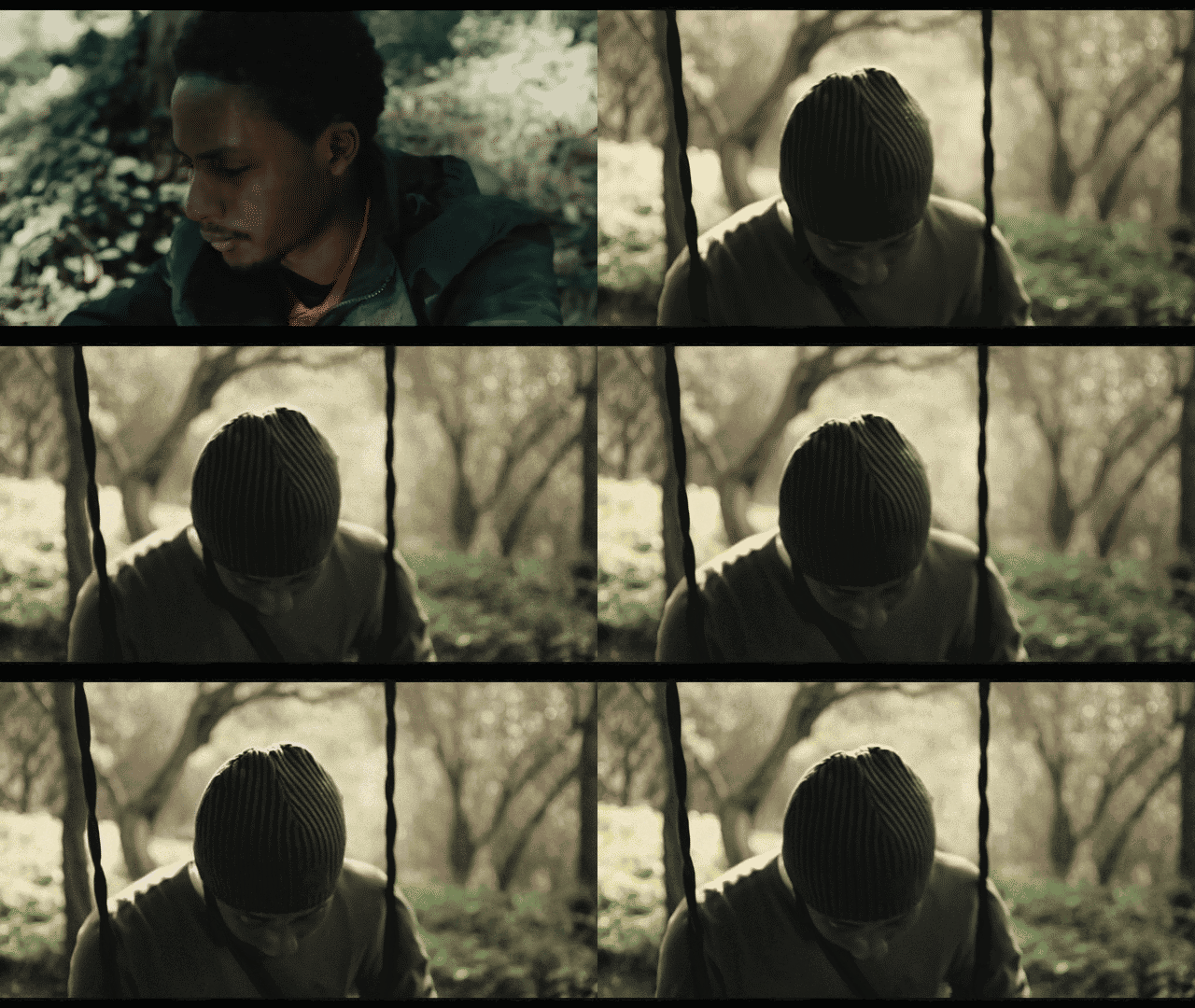
In light of recent surveillance developments — social media breaches, smart city ventures, and workplace monitoring — we need to pay more attention to and analyse the logics and practices that underpin, enable, and accelerate big data surveillance. As these interoperable systems map and monitor the movements and behaviours of populations, they cast long data shadows and draw inaccurate data portraits. The flaws of these systems remain points of academic discussion, but as these portraits are propelled forward in space and time perpetuating existing inequalities, more public input is needed on these futures and their implications for people and places. As part of an international multiphase project on Big Data Surveillance, in 2018- 2019 the Surveillance Studies Centre, led by sava saheli singh, produced three short films speculating surveillance futures and the effects of deeply embedded and connected surveillant systems on our everyday lives. Intended as public education tools to spark discussion and extend understandings of surveillance, trust, and privacy in the digital age how these manifest in the physical and emotional spaces around us, each film focuses on a different aspect of big data surveillance and the tensions that arise when the human is interpreted by the machine. BLAXITES follows the story of a young woman whose celebratory social media post affects her access to vital medication. Her attempts to circumvent a system that is tracking her life, lead to even more dire consequences. In FRAMES, a smart city tracks and analyzes a woman walking through the city. Things she does are interpreted and logged by the city system, but are they drawing an accurate picture of the woman? In A MODEL EMPLOYEE, an aspiring DJ has to wear a tracking wristband to keep her day job at a local restaurant. To her annoyance, it tracks her life during and outside of work, even using location-based surveillance to nudge her. She figures out a way to fool the system, but a new device upgrade means trouble. The films raise issues in our understandings of trust and surveilled relations, while making visible the underlying systems that map and manipulate us.

A Model Employee

Frames
In light of recent surveillance developments — social media breaches, smart city ventures, and workplace monitoring — we need to pay more attention to and analyse the logics and practices that underpin, enable, and accelerate big data surveillance. As these interoperable systems map and monitor the movements and behaviours of populations, they cast long data shadows and draw inaccurate data portraits. The flaws of these systems remain points of academic discussion, but as these portraits are propelled forward in space and time perpetuating existing inequalities, more public input is needed on these futures and their implications for people and places. As part of an international multiphase project on Big Data Surveillance, in 2018- 2019 the Surveillance Studies Centre, led by sava saheli singh, produced three short films speculating surveillance futures and the effects of deeply embedded and connected surveillant systems on our everyday lives. Intended as public education tools to spark discussion and extend understandings of surveillance, trust, and privacy in the digital age how these manifest in the physical and emotional spaces around us, each film focuses on a different aspect of big data surveillance and the tensions that arise when the human is interpreted by the machine. BLAXITES follows the story of a young woman whose celebratory social media post affects her access to vital medication. Her attempts to circumvent a system that is tracking her life, lead to even more dire consequences. In FRAMES, a smart city tracks and analyzes a woman walking through the city. Things she does are interpreted and logged by the city system, but are they drawing an accurate picture of the woman? In A MODEL EMPLOYEE, an aspiring DJ has to wear a tracking wristband to keep her day job at a local restaurant. To her annoyance, it tracks her life during and outside of work, even using location-based surveillance to nudge her. She figures out a way to fool the system, but a new device upgrade means trouble. The films raise issues in our understandings of trust and surveilled relations, while making visible the underlying systems that map and manipulate us.

Frames

Blaxites
In light of recent surveillance developments — social media breaches, smart city ventures, and workplace monitoring — we need to pay more attention to and analyse the logics and practices that underpin, enable, and accelerate big data surveillance. As these interoperable systems map and monitor the movements and behaviours of populations, they cast long data shadows and draw inaccurate data portraits. The flaws of these systems remain points of academic discussion, but as these portraits are propelled forward in space and time perpetuating existing inequalities, more public input is needed on these futures and their implications for people and places. As part of an international multiphase project on Big Data Surveillance, in 2018- 2019 the Surveillance Studies Centre, led by sava saheli singh, produced three short films speculating surveillance futures and the effects of deeply embedded and connected surveillant systems on our everyday lives. Intended as public education tools to spark discussion and extend understandings of surveillance, trust, and privacy in the digital age how these manifest in the physical and emotional spaces around us, each film focuses on a different aspect of big data surveillance and the tensions that arise when the human is interpreted by the machine. BLAXITES follows the story of a young woman whose celebratory social media post affects her access to vital medication. Her attempts to circumvent a system that is tracking her life, lead to even more dire consequences. In FRAMES, a smart city tracks and analyzes a woman walking through the city. Things she does are interpreted and logged by the city system, but are they drawing an accurate picture of the woman? In A MODEL EMPLOYEE, an aspiring DJ has to wear a tracking wristband to keep her day job at a local restaurant. To her annoyance, it tracks her life during and outside of work, even using location-based surveillance to nudge her. She figures out a way to fool the system, but a new device upgrade means trouble. The films raise issues in our understandings of trust and surveilled relations, while making visible the underlying systems that map and manipulate us.

Blaxites

Visualising the Past, Rebranding the Present I – Amman
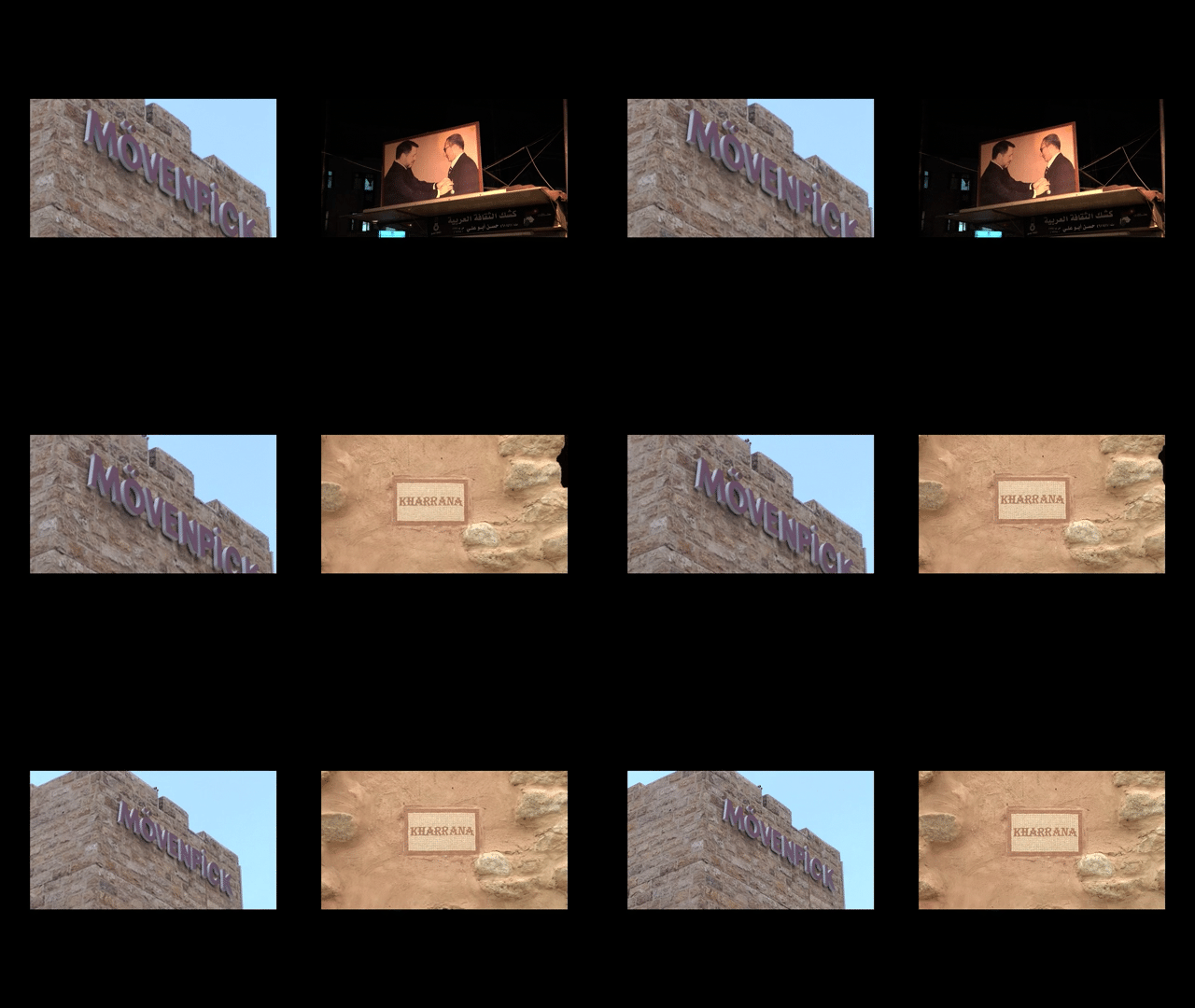
The following films were created from 100 inteviews with heritage ‘ stakeholders’s in Amman and Damascus in 2009-10 for an ESRC-funded research project examining the colonial modernities of the two cities. Each film covers a different theme of the relationship between cultural identity and heritage tourism and is edited using a different filmic style in order to examine how the way we produce knowledge affects the knowledge that is produced. In this way I aimed to show how filmmaking as a form of ethnography can help us do the following: 1. Reflect back on our research methods as researchers and how the methods we choose influence the knowledge we produce 2. Interrogate the mechanisms of representation within contemporary heritage discourse from the position of the knowledge producer and the intended audience. I. Amman – The linear format. Interview footage – including medium close-up shots of authority figures in offices – is intercut with shots of the urban landscape in question. ‘Cutaways’ are used to support or contradict verbal statements. Viewers are given the position of judge in that they feel they have been given access to all the main issues so they can come to a conclusion. This positionality encourages the viewer to identify with the expert, whose location (office) is separated from the subject (heritage). The ‘authorative’ perspective is somewhat destabilised by the omission of a voiceover.

Visualising the Past, Rebranding the Present I – Amman

Visualising the Past, Rebranding the Present IV: Bitter Coffee
The following films were created from 100 inteviews with heritage ‘ stakeholders’s in Amman and Damascus in 2009-10 for an ESRC-funded research project examining the colonial modernities of the two cities. Each film covers a different theme of the relationship between cultural identity and heritage tourism and is edited using a different filmic style in order to examine how the way we produce knowledge affects the knowledge that is produced. In this way I aimed to show how filmmaking as a form of ethnography can help us do the following:br 1. Reflect back on our research methods as researchers and how the methods we choose influence the knowledge we produce. 2. Interrogate the mechanisms of representation within contemporary heritage discourse from the position of the knowledge producer and the intended audience. IV. Bitter Coffee – Highlighting the impact of film as collaboration via the ‘match cut’. Sequences of formal, officebased interviews with state representatives are intercut with noisy in-situ commentaries from Zaher’s friends, colleagues and neighbours in the Old City. The film cuts from the Minister of Tourism (in front of a portrait of President Assad) telling us ‘tourism is an image’ to a man selling bird seed to young Syrian couples who believe feeding pigeons in front of the Omayyad Mosque will help them conceive. Sound edits stray into the next scene so that banging from a metalwork shop resonates into the next scene where a retired French lighting engineer shows us his beautiful restored house in Nofara (a quarter in the Old City).

Visualising the Past, Rebranding the Present IV: Bitter Coffee

Postcolonial Encounters
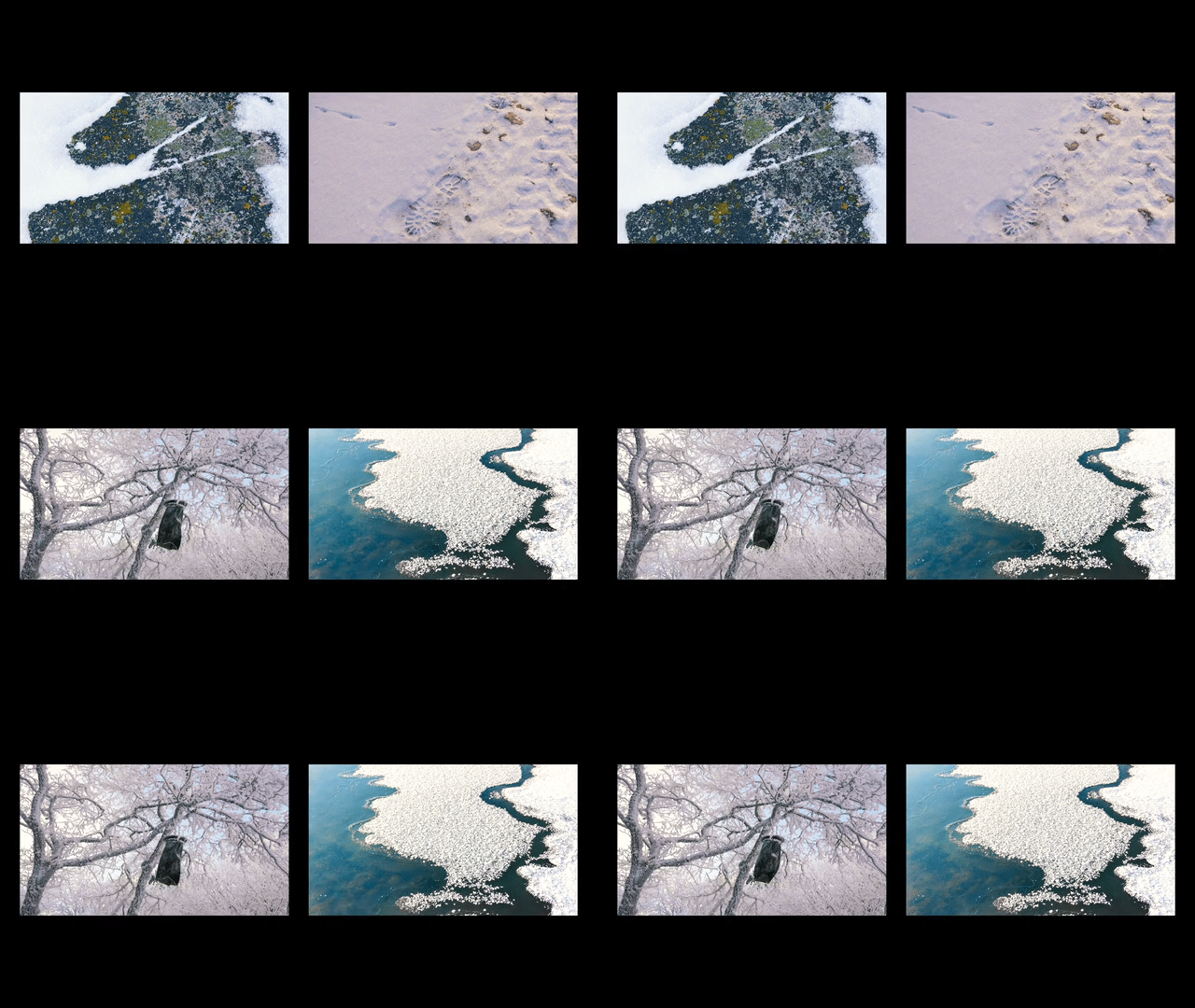
This film is a first step in developing a longer film and a method to re-use audio material gathered during fieldwork research on women's romantic/sex tourism in a new format of documentary film. In 2001-3 I carried out a series of interviews with women and men in the tourist resorts of the Sinai, Egypt about their romantic and sexual relationships. This research was published as 'Sex, tourism and the postcolonial encounter: Landscapes of longing in Egypt' (Ashgate 2010). It seems very apt to use film when doing research on geographical relationships in tourism. After all, as Said and the whole canon of postcolonial studies have noted, the power relations between the global North and South are played out through imagery (and writing) and nowhere is this more the case than in tourism where the landscapes and people of the South are reconfigured into aesthetic scenes for our sensual pleasure. So can these painful and damaging power imbalances also be upset and reworked through the use of images? If so how do you achieve this and visually represent the process of gendered and racial othering through imagery using film? Most men and women in these relationships wanted to remain anonymous and in any case filming them directly would leave them vulnerable to being stereotyped themselves as if they were being offered up to their audience as televisual voyeurism. So instead in this test short, I separated the audio from visual. Using the audio interviews as the soundtrack for the film, the visuals could do other work. Instead of sundrenched palm trees and beaches the film shows the landscape where European women come from not the landscapes they long for. In this way we can begin to understand how women's 'sex tourism' is about so much more than sex. This is a short experimental trailer for a longer version of the film.

Postcolonial Encounters

1 9 10 11