Grandhotel Cosmopolis Transformation
Germany Supporting local transformations with the Grandhotel Cosmopolis: cultural politics, care and collaboration beyond the pandemic The film is an emotional, visual and narrative dimension of a collective learning process of a cultural institution that took place in the pandemic. The directors say: We aimed to interpretate provisional findings of an activist-research project that took place at a cultural institution in Augsburg (Germany) during the pandemic. Symbolised as “Grandhotel Cosmopolis Transformation Process” the project relates to the current crisis of culture production, raising questions on purpose, strategy and participants for the so often claimed need for cultural change towards more just, sustainable and fair urban life. Based on several municipalist engagements, it assembles in a post-structural interpretation what was learned on enabling and limiting conditions for the co-creation of collective actions towards urban transformation. Dwelling on self-organisation, collective reflection and re-signification, the architects for transformation experiment with practices of co-production. Understood as prefigurative practices they might serve as suggestions for urban planning in Augsburg and more specifically they intent to inform the following collective re-design of the 2600qm building that cultural institution wants to maintain as real world lab. When this film narrates the phase of deliberative orientation about this institutional re-design, a second film will accompany the implementation of hopefully co-designed modifications. The film itself was produced in collaboration of people who participated in and made sense in different ways of the “Grandhotel Cosmopolis Transformation Process”, but directed by the activist-researcher herself. The aesthetic form reflects its discontinuities, envisioned fears and hopes and ambiguities that belong to this collective learning in support of urban transformation beyond the pandemic.

Grandhotel Cosmopolis Transformation

Goat Breakfast: Becoming-with God, volcanoes, livestock and trees
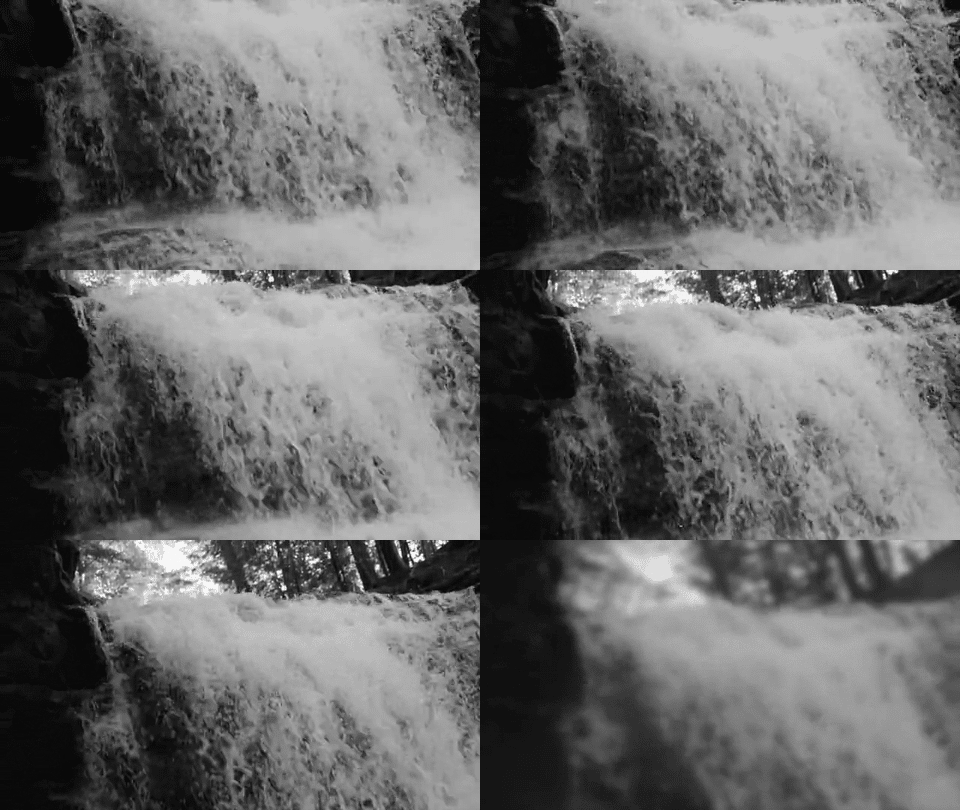
Germany/South Africa Maasailand, Tanzania Cultural Geographies, more-than-human geographies Due to climate change, the lands in the rain shadow of Tanzanian volcano Meru are increasingly affected by drought. Young Maasai Paulo must find creative ways to feed his first son, who just learned to walk. As his goats lack milk, even for their own babies, he sets out into the dust every morning in search of breakfast. This film aims to explore the interspecies relationality and more-than-human entanglements involved, moving towards a multisensual, multilingual and multispecies ways of knowing. It also sets out to illustrate the agencies and co-becomings of geological formations, Spirit, fauna and flora through an audiovisual geopoetics of Maasailand. The research work that is underlying this film is still a project in progress, and concerns how different ways of knowing -of different peoples, different species and more-than-human agents- can contribute to academic knowledge making. This is part of a larger effort to make the voices of more people and even non-human others heard, and do research with them instead of on them. It is geared towards the decolonization of knowledge in academia, in which Indigenous ways of knowing are not seen as data, but engaged with as part of the theoretical conversation, thus responding to calls for cognitive justice, and extending this even across the species divide. The essentialized dualism of nature versus culture is a relatively recent, specific Northern notion (Descola, 2013; Mullin, 2002), and climate change and the Anthropocene confront us with the idea that it becomes increasingly difficult to keep separating the two (Dibley, 2012; Latour, 2017). As a wide variety of Indigenous peoples perceive and experience human and non-human animal worlds as interactive and indivisible (Ingold, 1994; Rival, 1993), their understandings of personhood, agency and the more-than-human fundamentally challenge Northern notions. These have implications for understandings of knowledge and how to do research, opening avenues to develop more dynamic, relational and multivocal approaches. However, the underlying core Cartesian dichotomy of nature/culture has been difficult to deconstruct, because it forms ‘the key foundation of modernist epistemology’ (Descola & Pálsson, 1996, p. 12). To access the ‘entirely different intellectual landscape, one in which states and substances are replaced by processes and relations’ (Ibid.), often audiovisual recording of data and dissemination of results is much more effective. It appeals to more multisensual, multivocal, contextual and dynamic ways of knowing that broaden and move beyond the mind-centered and often restrictive logic of exclusively verbal communication and information. Selected Reviews The film presents the idea that everything co-exists a chain of relation and dependence. The film is beautifully shot and unfolds at a slow but natural-feeling pace. It closes with a sense of intimacy, which makes it worth watching besides the landscape and animals. It could be interesting to open discussion about watching/observing individuals in their daily routine. Are we othering? Do we watch with exoticizing eyes? Captures the stillness and peace of the location and the man’s struggle to feed his goats. Interesting audio mix seems to focus on certain sounds, eg cow bells.

Goat Breakfast: Becoming-with God, volcanoes, livestock and trees

Mystic Chords of Memory
USA Cymru, Wales Cultural Geographies Mystic Chords of Memory explores how people experience and maintain connections to their shared past and culture in Wales, through different kinds of narratives about place. Principal photography took place in summer of 2019, in geographical regions across the country ranging from the coal valleys of the south to Holy Island in the north. The full length film (in post production) features individuals whose knowledge and experiences include coal and slate mining, land-based art practices, folklore and storytelling, holy wells, sheep farming, local and national history, and environmental stewardship. I had a written my masters thesis on sense of place and place attachment, so those concepts were at the forefront of my thinking when I was developing this film. The idea for the film started with my own familial connection to Wales (where I had never been) through my maternal grandmother, and prompted reflection on different forms of relationships to place. I spent almost two years researching different regions, histories and cultural beliefs in Wales before I started planning the shoot. Most of my participant recruitment was accomplished by joining various Facebook groups, as well as through the wonderful nonprofit, Trec (Folk Development for Wales). Selected Reviews Needs subtitles at times, especially for the first speaker (not the narrator). There certainly is a foundation/core of a film here. The part of the two women (wives) reminiscing remind us that despite much of the hardship and loss (and today’s aversion to coal) this history has a very human and social element and shaped lives beyond the work day. Also, as much as I would like more details about place, I also respect that the film is not focusing on “a history of a place”.

Mystic Chords of Memory

Santuario (Citizen Miriam)
Columbus, Ohio Colour, Black & White Spanish, English (English Subtitles) First in a series exploring ICE's policies in the Covid era. The geography of the process of deportation and the story of a woman struggling to raise two children in the face of police state injustice. Translation of English to Spanish allows people to grasp the importance of an immigrant-led movement against xenophobic policies. A first-hand perspective of sanctuary in the Covid era. Santuario is the first act in an ongoing series of documentary shorts exploring ICE's policies and their effects on immigrant families. The geography of the process of deportation is described, and the story of a woman struggling to raise two children in the face of police state injustice. Translation of English to Spanish allows people to grasp the importance of an immigrant-led movement against xenophobic policies. A community seeking redemption, the church's decision to take in an immigrant, and the experiencing over 2 years of isolation to evade the destruction of a Honduran-American family. Interviews with Miriam and local social justice organizers with local newspapers, news clips, and BBC footage. The incorporation of experimental art and a score composed by three local artists. Illustrations to illuminate the experiences of Miriam's daughters. A phenomenological study. Miriam is experiencing what can only be described as emotional and physical abuse of a peaceful family by a reactionary government. The toll this takes on members of the community, the financial repercussions, and the political meaning of these events was documented and leaves the audience with a sense of urgency. Miriam has been living in sanctuary for over 900 days. Both Miriam and Pastor Sally Padgett had COVID-like symptoms, and Miriam struggles with a number of health complications. Her daughter has a learning disability. Uprooted and threatened, the only solution is a coordinated effort to petition legislators and educate people about this travesty. Selected Reviews It’s an important contribution to hear Miriam’s story in her own words. Nicely shot and edited.

Santuario (Citizen Miriam)