Brixton/Brickstone
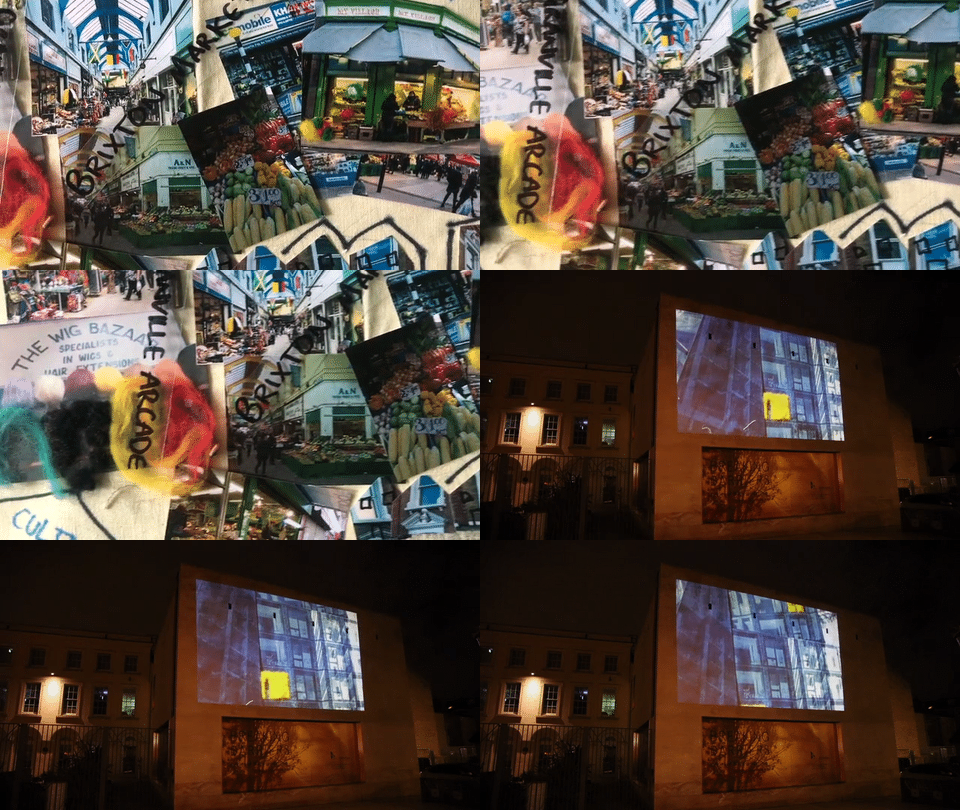
Crafting a community-led regeneration policy “What does home feel like, look like, smell like, sound like?” Words taken from spoken word piece by Grace Deveer, project participant This short film is part of a series of works that explore the challenges posed by regeneration and gentrification for local communities in Brixton. Using an arts-based approach, textile policies were made over four online sessions in July and August in 2020. A mixed media layering of domestic materials and processes, such as embroidery and felting, facilitated conversation and reflection over the hidden and real-life experiences of planning processes. Bespoke ‘collage kits’ were distributed to participants who were introduced to the technique of dry felting which is excellent for 2 and 3D sculpting of ideas. The course also included a session with Photofusion, an independent photography resource centre in the heart of Brixton, covering printing on fabrics. Artists Andrea Morreau and Emily O’Mara (with photographer Ellie Laycock as facilitator and participant) guided the participants through different techniques and ideas for decorating and embellishing the pieces. The next phase saw the works made into a showreel which was then projected onto various iconic Brixton buildings and public spaces. In this way, the intimate and domestic quality of the works was writ large into the public realm in a commentary of how spaces and places become vulnerable to the property development taking place. A final film (above) was then produced from this footage. A forthcoming exhibition at 198 in Railton Road Brixton (Sep 12-16) will include all original material, excerpts from the participants' workbooks, the original handcrafted woollen map of Brixton, a projection of the film, and a chance to write your own community-led housing policy.

Brixton/Brickstone

Goat Breakfast: Becoming-with God, volcanoes, livestock and trees
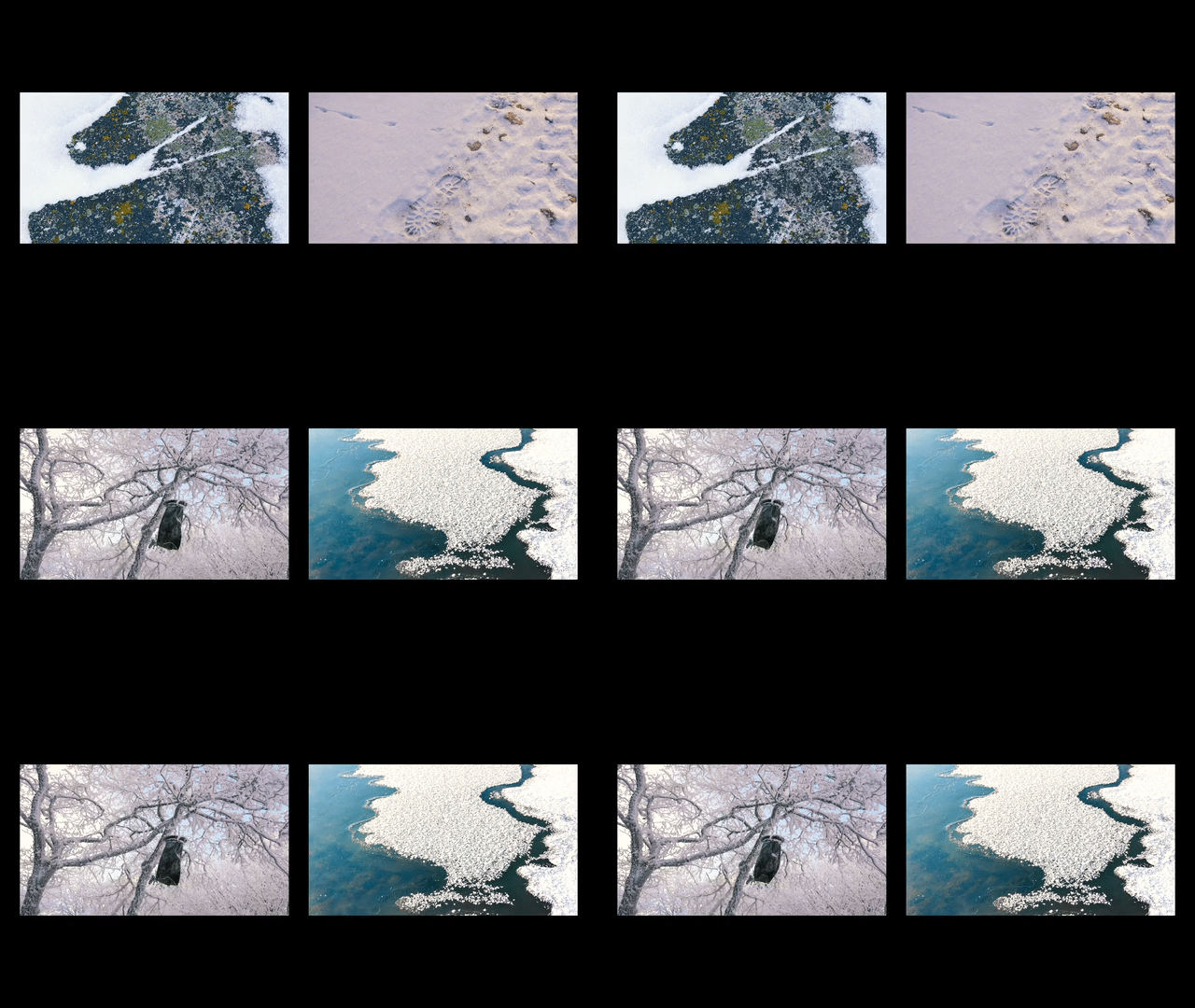
Germany/South Africa Maasailand, Tanzania Cultural Geographies, more-than-human geographies Due to climate change, the lands in the rain shadow of Tanzanian volcano Meru are increasingly affected by drought. Young Maasai Paulo must find creative ways to feed his first son, who just learned to walk. As his goats lack milk, even for their own babies, he sets out into the dust every morning in search of breakfast. This film aims to explore the interspecies relationality and more-than-human entanglements involved, moving towards a multisensual, multilingual and multispecies ways of knowing. It also sets out to illustrate the agencies and co-becomings of geological formations, Spirit, fauna and flora through an audiovisual geopoetics of Maasailand. The research work that is underlying this film is still a project in progress, and concerns how different ways of knowing -of different peoples, different species and more-than-human agents- can contribute to academic knowledge making. This is part of a larger effort to make the voices of more people and even non-human others heard, and do research with them instead of on them. It is geared towards the decolonization of knowledge in academia, in which Indigenous ways of knowing are not seen as data, but engaged with as part of the theoretical conversation, thus responding to calls for cognitive justice, and extending this even across the species divide. The essentialized dualism of nature versus culture is a relatively recent, specific Northern notion (Descola, 2013; Mullin, 2002), and climate change and the Anthropocene confront us with the idea that it becomes increasingly difficult to keep separating the two (Dibley, 2012; Latour, 2017). As a wide variety of Indigenous peoples perceive and experience human and non-human animal worlds as interactive and indivisible (Ingold, 1994; Rival, 1993), their understandings of personhood, agency and the more-than-human fundamentally challenge Northern notions. These have implications for understandings of knowledge and how to do research, opening avenues to develop more dynamic, relational and multivocal approaches. However, the underlying core Cartesian dichotomy of nature/culture has been difficult to deconstruct, because it forms ‘the key foundation of modernist epistemology’ (Descola & Pálsson, 1996, p. 12). To access the ‘entirely different intellectual landscape, one in which states and substances are replaced by processes and relations’ (Ibid.), often audiovisual recording of data and dissemination of results is much more effective. It appeals to more multisensual, multivocal, contextual and dynamic ways of knowing that broaden and move beyond the mind-centered and often restrictive logic of exclusively verbal communication and information. Selected Reviews The film presents the idea that everything co-exists a chain of relation and dependence. The film is beautifully shot and unfolds at a slow but natural-feeling pace. It closes with a sense of intimacy, which makes it worth watching besides the landscape and animals. It could be interesting to open discussion about watching/observing individuals in their daily routine. Are we othering? Do we watch with exoticizing eyes? Captures the stillness and peace of the location and the man’s struggle to feed his goats. Interesting audio mix seems to focus on certain sounds, eg cow bells.

Goat Breakfast: Becoming-with God, volcanoes, livestock and trees

Refuge
France Athens, Greece Migrant Crisis, Cities/Urban Life, Housing/Gentrification, Covid-19/Pandemic Turkish (English Subtitles) Following the life of a Turkish political refugee living in a squatted neighbourhood in Athens. My first purpose was to raise the voice of political refugees, who have crossed the borders to escape persecutions in their own countries. I wanted to explore the connection this man has constructed with this alternative living space. The squatted neighborhood is a complex space itself, with its own rules, system and cycle but after all, it is a refuge for refugees from all around the world as well as any one who share the dream of an alternative way of life. This was the biggest squat I have seen and I was fascinated from the collective work that keeps this place alive. In those straitened circumstances, they try to implement a horizontal administrative system based on solidarity. My biggest challenge during the filming was my lack of filming equipment. And also, I think I should have stayed there even more to realize a full-length film about the squats, by listening to more stories to show the different trajectories. As I am a political refugee as well, I face similar difficulties to stay in different European country so I didn't have the means to stay there longer. Selected Reviews An important contemporary testimony with geopolitical value. Stories of exile in Greece, the hardship, the everyday challenges and quotidian ways of living in your adoptive country. Instead of talking heads, talking bodies are shown interspersed with random occurrences in the urban area including people, places, cats, and practices.

Refuge

Celebrating Tribal Environmental Professionals: Polly Edwards
USA Oklahoma English A portrait of Polly Edwards , a Native American (Caddo) woman who directs Tribal environmental and emergency management programs in Oklahoma. Laurel Smith co-produced with Native undergraduates, Loren Waters (Cherokee and Kiowa) and Mia Riddle (Choctaw, Creek, and Chickasaw). Teaching Objective: To illustrate how Tribal environmental professionals serve their communities and encourage Native youth to consider environmental careers. Inspired by Indigenous media made in Oaxaca, Mexico, I co-produced this 8-minute video with two Native undergraduates, Loren Waters (Cherokee and Kiowa) and Mia Riddle (Choctaw, Creek, and Chickasaw). During the two years it took to coproduce this short film, we learned that Tribal Environmental Professionals (TEPs) serve Tribal and non-Tribal communities by monitoring water and/or air quality, remediating brownfields, managing natural resources, composing funding proposals, and/or overseeing educational outreach. To undertake these tasks, they work with entities such as Oklahoma’s Department of Environmental Quality, research centers at state universities, and federal science agencies such as the United States Environmental Protection Agency (EPA) and the United States Geological Survey. TEPs also collaborate together through organizations such as the Inter-Tribal Environmental Council and the Regional Tribal Operations Committee. We also learned vital clues about key Tribal leaders and Oklahoma representatives in Congress whose efforts led to the emergence of such Tribal environmental programs starting in the early 1990s. Filmmaking allowed us to identify the scope of a larger research project, establish relationships that will facilitate a participatory-as-possible approach, and led to funding for a third TEP video portrait. It also somewhat redressed the hierarchies that all too often characterize research focused on Indigenous geographies. We worked as closely as we could with TEPs, not just to learn about their careers, but also to strategize on what aspects of their education and experience they most wanted to share with us and later viewers. Selected Reviews This is an informative film about the collaborative practices of Tribal Environmental Professionals, what it is and they do, using Polly Edwards as example.

Celebrating Tribal Environmental Professionals: Polly Edwards