Artwashing Juxtaposed
Stellenbosch, South Afrida A multidisciplinary approach to understanding gentrification in the historial rural hamlets of Stellenbosch, South Africa The concept artwashing is juxtaposed in this short documentary film to visualize how art can create awareness about the process of gentrification in affected communities is rural hamlets surrounding Stellenbosch, South Africa. A land art project in each of the three rural hamlets of Stellenbosch (Pniël, Raithby, Jamestown) under threat was designed and constructed in collaboration with world renowned land artist, Strijdom van der Merwe and my urban honours students, with the main purpose to use art as awareness creation. In addition, visual arts students created short animation films on the same topic. Gentrification scholarship in South Africa largely focuses on issues of displacement and change in the social and urban character of neighbourhoods. In this film it is argued that the country is lagging in terms of policies and regulations to manage and/or control gentrification. Using the historical rural hamlets around Stellenbosch, namely, Pniël, Raithby and Jamestown as case studies, an argument is presented for incorporating intangible heritage as part of a proposed gentrification management overlay zone for these hamlets. The hamlets have a rich cultural heritage as they were established with the church as key historical landmarks. However, development-led gentrification poses the risk of destroying their heritage in the near future. In the absence of municipal bylaws and South African legislation and policies for the management of gentrification, experiences from elsewhere in the world are drawn upon, to present recommendations to the Stellenbosch Local Municipality on how gentrification can be managed to the benefit of the hamlets.

Artwashing Juxtaposed

When Monsters Walked The Earth
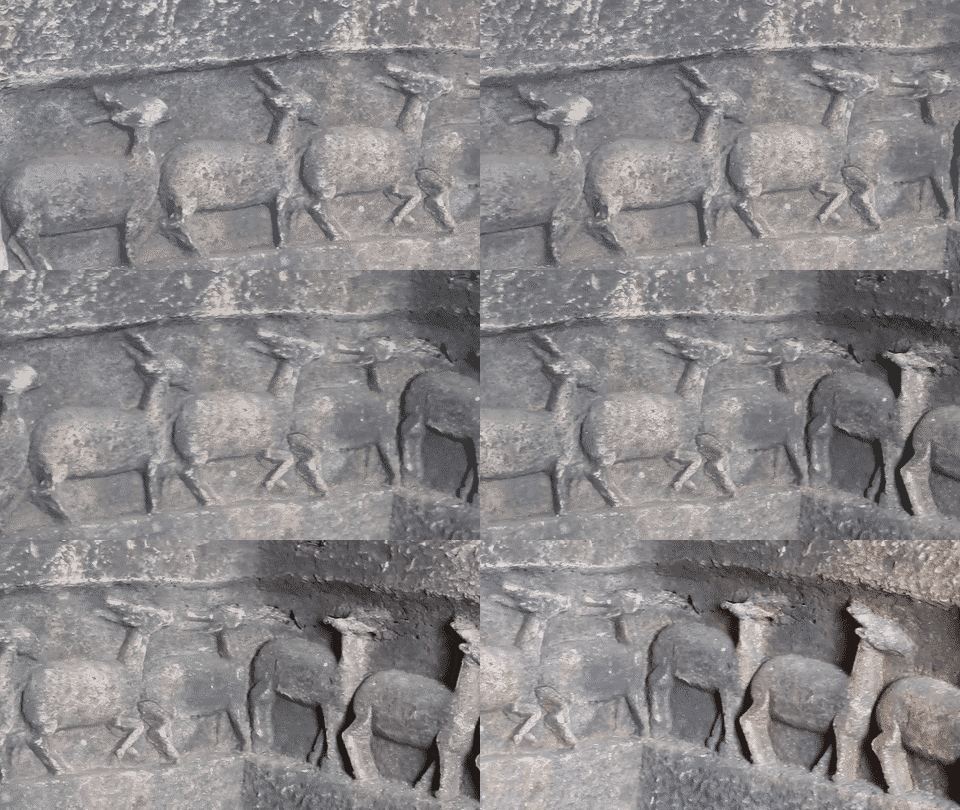
Maryland, USA University of Seville, Spain Grasshoppers have been admired and villainized throughout history. They have experienced significant changes in our world, including those most recently induced by humankind, having to adjust and resist individually and collectively. The film navigates current challenges capitalism has posed on the environment through the lens of this millenary species in rural Maryland. Can grasshoppers show more humanity than humans? This film explores how the current relations of production and intensive use of land affect the environment through the lenses of grasshoppers, a species that has been around for over 250 million years. The filmmakers start from the idea that our world has a form. Mountains, rivers, trees, and bushes… are the result of thousands of years of evolution. They have grown, adjusted, and mutated. But landscapes would not be without human perception, which has always been conditioned to human needs. People have taken whatever they needed from nature to survive and, in the process, have created a way to understand it. Like many other species, human relationships with the environment have never been peaceful. But it has become more violent as the centuries have gone by, first through capitalism organizing spatial relations (land grabs, imperialism) and in recent times because of world population increasing at a similar pace as greed. The film focuses on this evolution, exposing the contradictions of our actions as a species.

When Monsters Walked The Earth

Rich Appetites: The Foundation
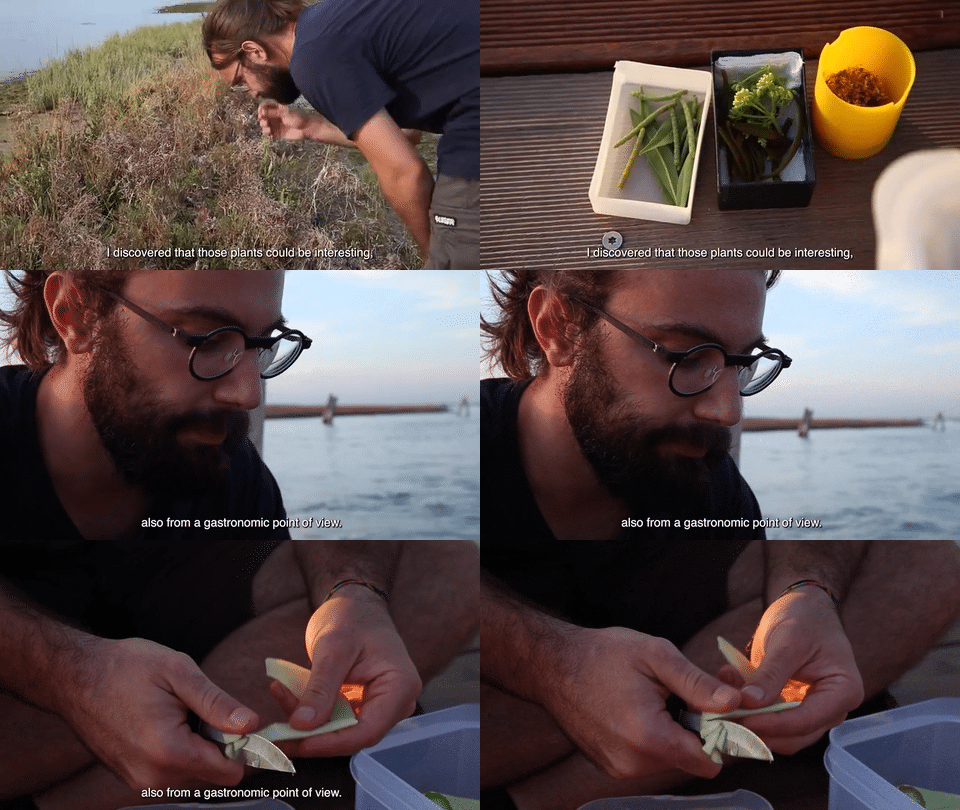
Industrial agriculture has failed to solve hunger, decimated rural communities, and had severe ecological consequences. So why is this model being exported to Africa and promoted in international policy circles? Our film sought to investigate the role of the Gates Foundation and other philanthrocapitalist endeavors in pushing industrial and high tech forms of agriculture on farmers in Africa, and demonstrate how and why these efforts are exacerbating hunger and inequality, rather than solving them. We also wanted to highlight widespread resistance by civil society organizations and farmers, who have been developing and practicing sustainable agroecological alternatives that offer greater promise in ensuring food security and addressing climate change. Rich Appetites Film 1: The Foundation is the first short film in a 5 part series. The other titles in the series include Seeds, Money, Science, and Agroecology in Action. In the process of conducting research for the film series, we identified a number of ways that the Gates Foundation is exerting undue influence over food politics at the global and regional scales--from pushing restrictive seed laws, to shaping the priorities of the Food and Agriculture Organization of the United Nations. Through interviews, we also documented a number of stories about the negative impact Gates Foundation funding has had on many farmers and rural communities, and were able to use the power of storytelling to demonstrate the political and ecological possibilities of agroecology as an alternative model. Film-making allowed us to bring our ongoing research to life in a new way, and to reach new audiences by creating compelling, shareable narratives. In particular, it helped us recognize the need to incorporate real people's voices and faces into this research, to create connections and concern. At times, it was hard to arrange interviews across multiple timezones and with spotty internet connections (especially in rural areas). However, this was important to us to try to include a diversity of voices in the project, without having the budget to travel extensively. We also feel that given the climate crisis, flying to all of these places to interview people is ecologically irresponsible and unjustifiable. We are proud and pleased with how we were able to create global films that are more climate-friendly.

Rich Appetites: The Foundation

(un)clean (un)seen
Lumbini, Nepal Nepali Sanitation workers are at the forefront of climate change working in increasingly challenging conditions, often without protection. The film was used to document the final performance of 12 sanitation workers in Nepal. The sanitation workers had attended a series of participatory arts workshops as within an international, interdisciplinary research programme 'Towards Brown Gold' that explored shit, wastewater and marginality in five rapidly developing off-grid towns. The performance and film sought to raise awareness of issues affecting sanitation workers, some of the most precarious workers in the world. This is a performance by twelve sanitation workers in Nepal supported by UK artist Alice Fox and Nepali arts-activist Ashmina Ranjit. The performance was just one element of an international, interdisciplinary research programme on sustainable sanitation, wastewater and marginality. The film documents the performers as they travel to the Women of the World festival held in Lumbini Peace Park Nepal in 2022. Can the performance enhance dignity and respect for the local sanitation workforce? support arts-based forms of knowledge making? surface issues of caste and untouchability? or push sanitation worker rights up the agenda? The film gave apparent value and status to the project (from the perspective of these sanitation workers). If we had more time and contacts (which we do now) we would co-produce the film as well as the performance with a local film maker. The film has been a useful teaching tool to commence discussions around sanitation, untouchability and womens labour in conjunction with other more didactic resources.

(un)clean (un)seen

Je suis partout et nulle part à la fois
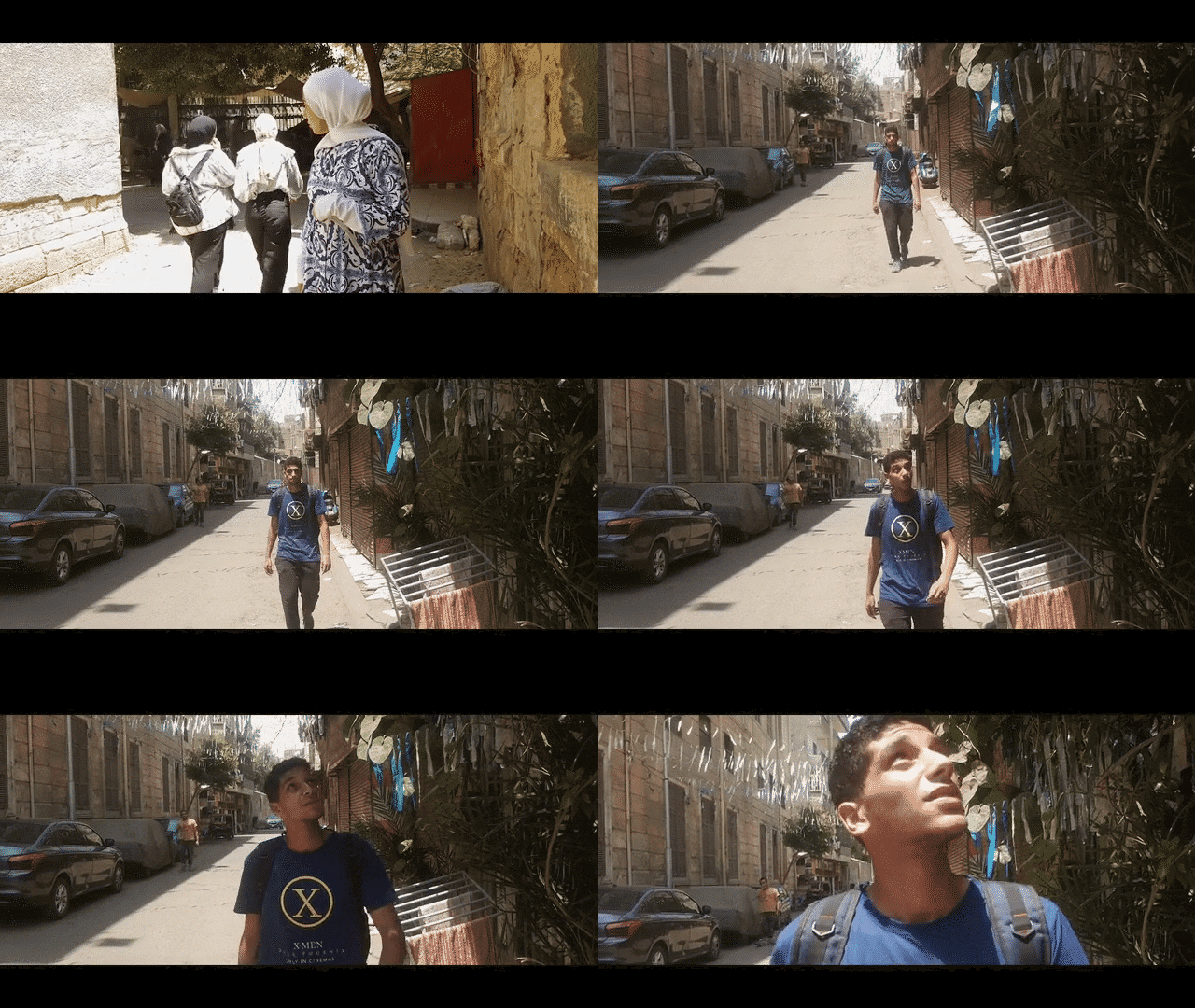
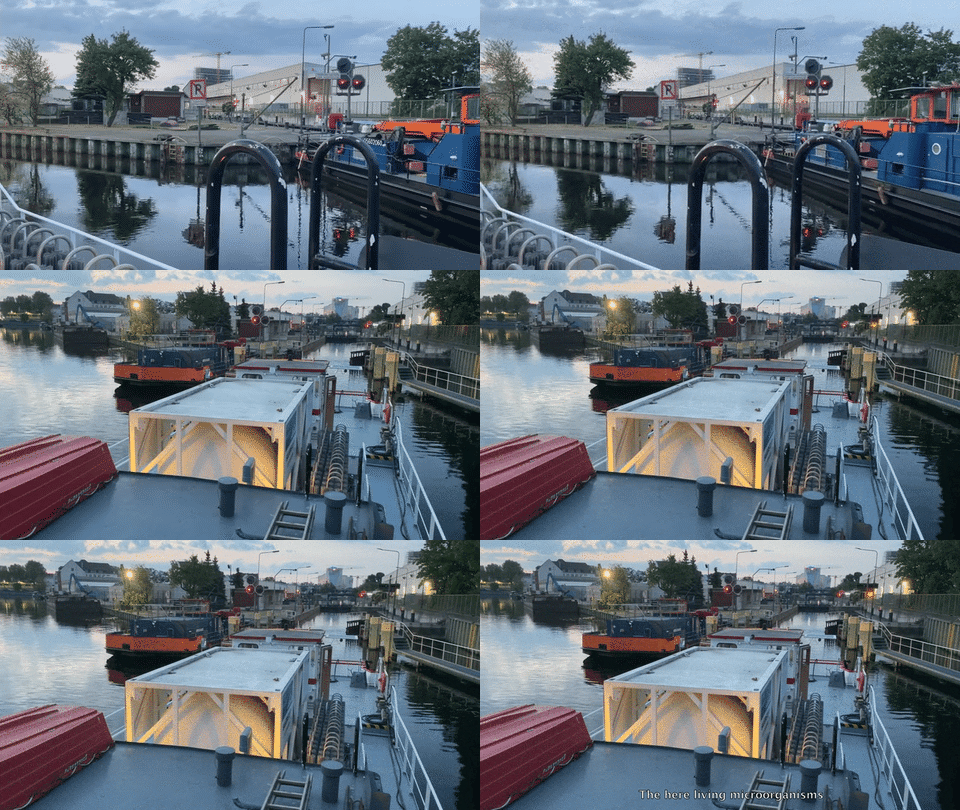
Portugal French and Portuguese. English subtitles This coming of age film follows Filipe and Hugo while they spend the summer in Trás-os-Montes, Portugal. From childhood memories, lazy summers filled with boredom, to their aspirations of a better life, the film explores the ambiguous relationship these youngsters foster with rural Portugal, and their way they navigate across various identities, languages and terrains. Then Director writes: Film-making was a central component of the project, since the research design. It enabled to create a long term relation with the participants, and to access their memories and imaginations. But also, in a project focusing on the making of places in peripheries, it enabled me to highlight particular landscapes and rural areas' atmospheres and architectures. Portugal is a country of emigration: one in five Portuguese live abroad. In the last decades, the regions bordering Spain are the most affected by these departures In the northeastern region of Trás-os-Montes, a third of the population has left since the 1960s. This is where I met with two youngsters, sons and grandsons of emigrants: Hugo and Filipe. Hugo lives close to Paris and spends every summer at his grandparents’ in Trás-os-Montes. There he reconnects to his roots and the slow pace of the village. Filipe did the same: for years, he spent every summer at his grandma’s before his family eventually moved back to Portugal, a few kilometres from his grandma’s home. But what awaited him once he graduated from the local college? As many before him, he emigrated. When we meet, during the summer 2019, he works in London. In February 2020, the world enters a pandemic Filipe is laid off, he packs and comes back to his village in Portugal. Filipe dreams of new horizons, and the answer lays in front of him of going back to where he was born, Paris. While Hugo, in Paris, dreams of living and working in Portugal but, not in the village, not in Trás-os-Montes This is a film about a region which performs as a shrine, a physical container of memories of happy childhoods and simpler times, that one visits once a year and puts a small bouquet of flowers at its feet. Some stay close-by, and live out of its pilgrims, but very few are able to experience it as a real and viable home.

Je suis partout et nulle part à la fois

Restoring the Spirit: Wai Lia Bere Cave
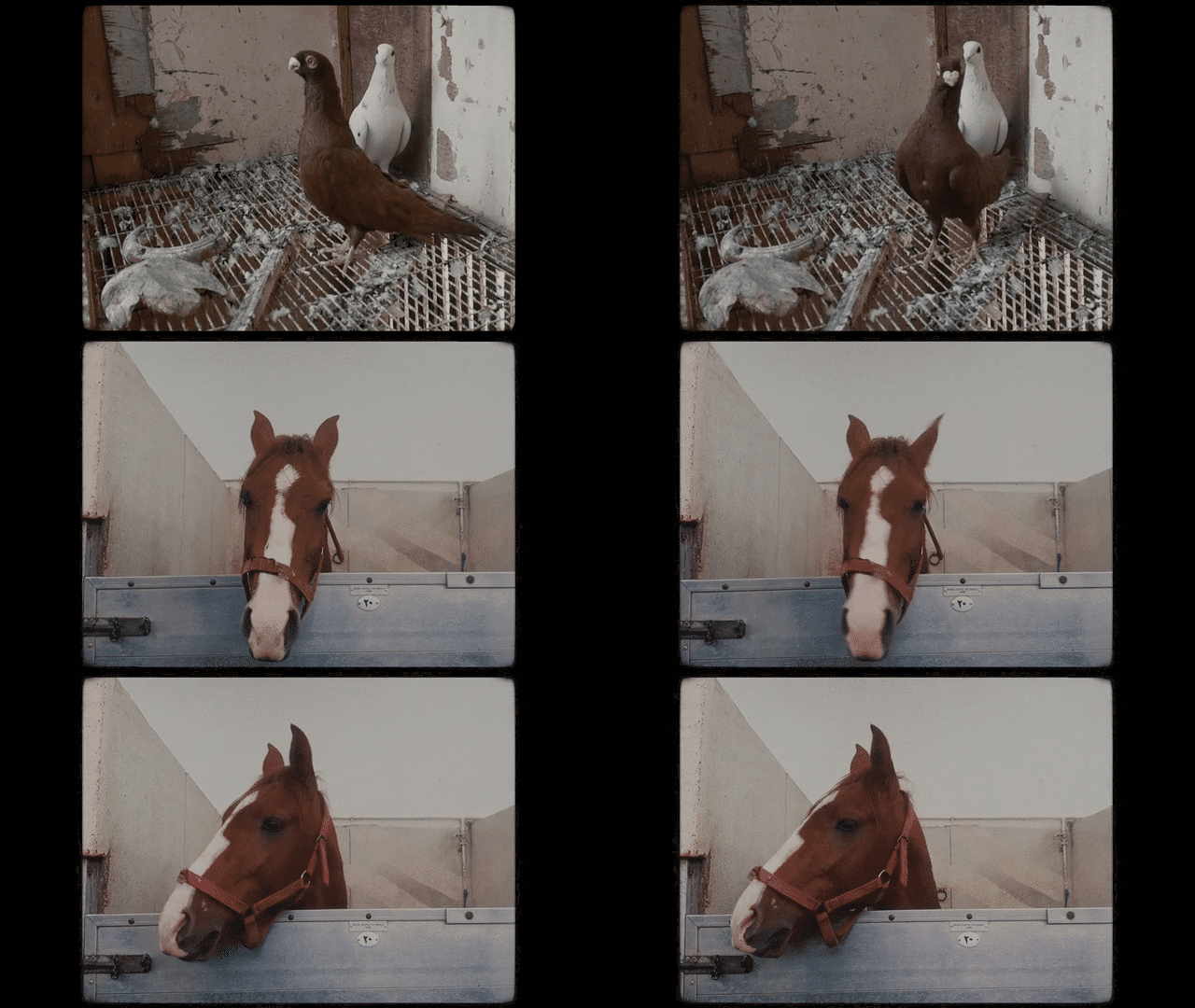
Melbourne Australia Timor-Leste In Timor-Leste spring water is central to people’s connections to each other and the ancestral spirit world. Underground flows are the carriers of spirits and the providers of life and well-being to the living. This film follows Simião, a university student, who had been very ill and had almost died when something had attacked him and taken his spirit. With the water’s help, the family had recovered it, and his spirit had been restored to his body. Through ceremony the debt to the ancestral spirits of these healing waters is repaid and connections to more distant coastal springs are honored. As water resources diminish with increasing population and economic pressures as well as global climate change, Restoring the Spirit addresses a subject of ever increasing local and global importance. In many areas water is not only a vital resource but is also endowed with an agency and power that connects people, spirit beings, place and space. It is also understood as central to people's wellbeing and healing processes. As one outcome of over two decades of ethnographic research across the island of Timor, this film provides an intimate more-than-human account of the complex social and ecological specificities of water-focused societies spread across the one of the world’s newest nations, Timor-Leste. The film explores contemporary challenges to the ancient uses, beliefs and rituals associated with water and wellbeing and identifies the ritual ecological practices through which the use and sharing of water continues to occur and guide socio-ecological systems on the island.

Restoring the Spirit: Wai Lia Bere Cave

The Liberation of Jeanneke-Pis
Italy Bruxelles Three women gather in a basement, around a map of the city of Brussels, to plan something suspicious. They exchange looks of understanding and draw lines and circles on the map in front of them. Just before dawn, they find themselves in the Impasse de la Fidelité where the statue of Jeanneke Pis stands, for forty years locked behind a grid. While one of them stands guard at the street entrance, the others fumble to open the big padlock that keeps Jeanneke-Pis locked up. Finally, the lock breaks. At dawn, in front of Polaert's belvedere, Jeanneke-Pis will be freed, finally be able to see the whole city in front of her. The Jeanneke-Pis depicts a little girl with her hair pulled back in two pigtails, crouching in the act of urinating. Small in size, just 50 cm, it was made in 1985 in order to balance the weight of the male representation of the famous Manneken-Pis sculpture, and to symbolise fidelity between lovers. It is located right in front of one of the city's best known pubs, situated in the Impasse de la Fidelité, a cul-de-sac just 600 metres north of the Manneken-Pis. It is a place you never pass by by chance because it is located in the maze of narrow streets that nestles behind the Stock Exchange. The sculpture, never illuminated by artificial light and barely reached by natural light, is located in a small niche carved into the wall, closed by a gate secured by three padlocks placed at different heights. The aim of the film is to show how even the symbolic representations of bodies in urban space return different rights to the city at the intersection of gender differences.

The Liberation of Jeanneke-Pis

1 3 4 5 6 7 11